Car Stuck in Park? What to Tell a Brisbane Tow Truck Operator
A car can have a flat battery, start normally or display a transmission warning and still refuse to leave Park. That is a loading issue—not a reason to drag the vehicle by its tyres. The right questions are whether the wheels, steering and parking brake can be controlled safely, and what the manufacturer permits.
Why an automatic car stuck in Park is different from a car that will not start
When an automatic transmission is in Park, a parking mechanism may prevent the driveline from rotating. Depending on the vehicle, a separate electronic parking brake can also hold the wheels. If steering is locked or the vehicle has an electrical fault, the operator may not be able to position it the way they would a normal rolling car.
This is why “my car won't start” does not give the operator enough information. A dead starter battery with freely rolling wheels is one situation; a car with locked driven wheels at the bottom of a steep driveway is another. The brand, model, drive system and exact fault matter.
Common reasons a vehicle may not select neutral
Some electronic selectors and park-brake controls cannot operate as usual without power. Tell the operator whether dashboard displays and electric controls still respond.
The selector may show a fault, fail to register a brake-pedal input or refuse a shift. A flashing warning is a reason to obtain vehicle-specific advice, not to keep forcing it.
A broken selector cable or internal problem can prevent normal movement. Describe unusual noises, fluid leaks and whether the car can roll; avoid diagnosing the exact fault yourself.
Even if the gearbox changes position, the car might still not move or steer. These are separate questions the tow operator needs answered.
What you should report before booking
- Vehicle: year, make, model and whether it is front-wheel drive, rear-wheel drive or AWD/4WD if known.
- Selector: currently in Park, neutral unavailable, or dash shows a fault; say if the gear indication is uncertain.
- Wheels: whether the car rolls at all, and whether any tyre is flat or wheel is locked or damaged.
- Keys and power: whether the physical key or fob is present and whether the battery has power.
- Location: open street, driveway, steep incline, tight courtyard or other restricted area. Underground car parks are outside BTC's offered recovery services.
- Destination: mechanic, dealer or other agreed address, including whether that business can accept the vehicle.
Photographs of the vehicle's position, dashboard warning and available approach can be helpful if it is safe to take them. Do not take photos on the traffic side of a busy road.
Why a tilt tray can help—and why it is not an automatic guarantee
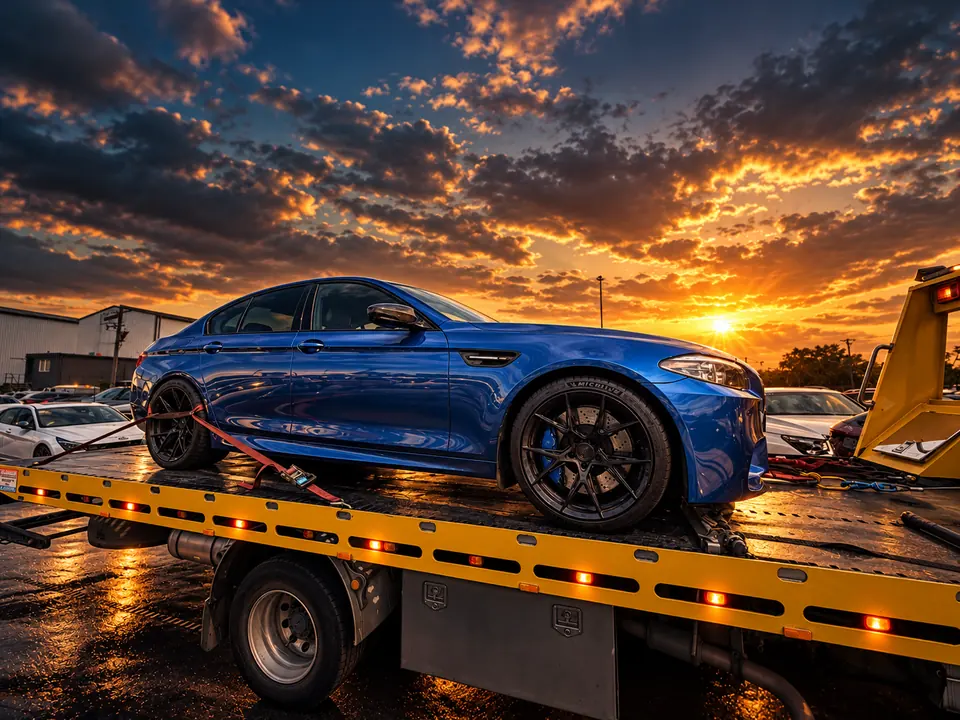
A tilt tray is often appropriate because the vehicle is carried rather than driven to its destination. But a tilt tray still needs a safe way to get the car onto the deck. A car that cannot roll may need additional wheel-handling or loading equipment; some positions or conditions are unsuitable without a specialist assessment. BTC can review suitable jobs after receiving condition and access details. Do not assume equipment availability until it is confirmed.
RACQ warns that improvised rope towing can risk substantial mechanical damage and safety hazards, particularly with modern vehicles. The right transport approach depends on the manufacturer's guidance and the actual condition of the car; see RACQ's explanation of towing other cars.
Some vehicles have a manufacturer-specified emergency release or transport mode. It is model-specific, sometimes requires power and can create a rolling hazard if used incorrectly. Follow the owner's manual or qualified roadside assistance directions. Do not disconnect parts, bypass interlocks or release brakes on a slope based on a generic internet instruction.
What if the keys are missing too?
No key can mean locked doors, steering or an electronic park brake that cannot be released. It also means the operator needs to confirm that the person booking is authorised to move the vehicle. Describe the missing-key situation at the first contact; an ordinary pickup quote may no longer apply. For appropriate mechanical breakdown transport, visit our breakdown towing service.
How does this affect the price?
The pickup-to-destination distance is only part of the work. Time and equipment can change if wheels are locked, access is narrow, the vehicle is heavy or it must be positioned without rolling normally. Our published price guide describes standard and non-standard quoting factors; an assessment of this vehicle takes precedence over a standard-car starting price.
Questions about towing automatic cars
Can a tow truck move an automatic car in Park?
It may be possible with suitable equipment and access, but it must be assessed before booking. The answer is not the same for every model, driveline or fault.
Can an automatic car be towed in neutral?
That depends on the manufacturer, transmission and towing method. Selecting neutral does not automatically make wheel-on-road towing safe. Follow the vehicle manual and the transport operator's assessment.
Does a flat battery always prevent loading?
No. Battery failure and a locked drivetrain are not identical problems. Tell the operator what does and does not work rather than assuming the vehicle can or cannot be moved.
Will you enter an underground apartment garage?
No. BTC does not provide underground car-park recovery. Tell us about height and access restrictions so you can seek a suitable specialist rather than dispatching the wrong truck.
Need a suitable tow or vehicle transport in Brisbane?
Tell Brisbane Towing Company the pickup, destination, vehicle or bike condition and access details. We will check the job and confirm a quote and current availability before booking. Suitable non-crash towing and vehicle transport only; no underground car-park recovery.