
Classic Car Transport in Brisbane: Preparation and Handover
An older car can be mechanically sound yet require more careful preparation than a modern commuter vehicle. Vintage trim, unusual start procedures, non-standard braking systems, parts availability and long storage can all affect how it should be loaded and received.
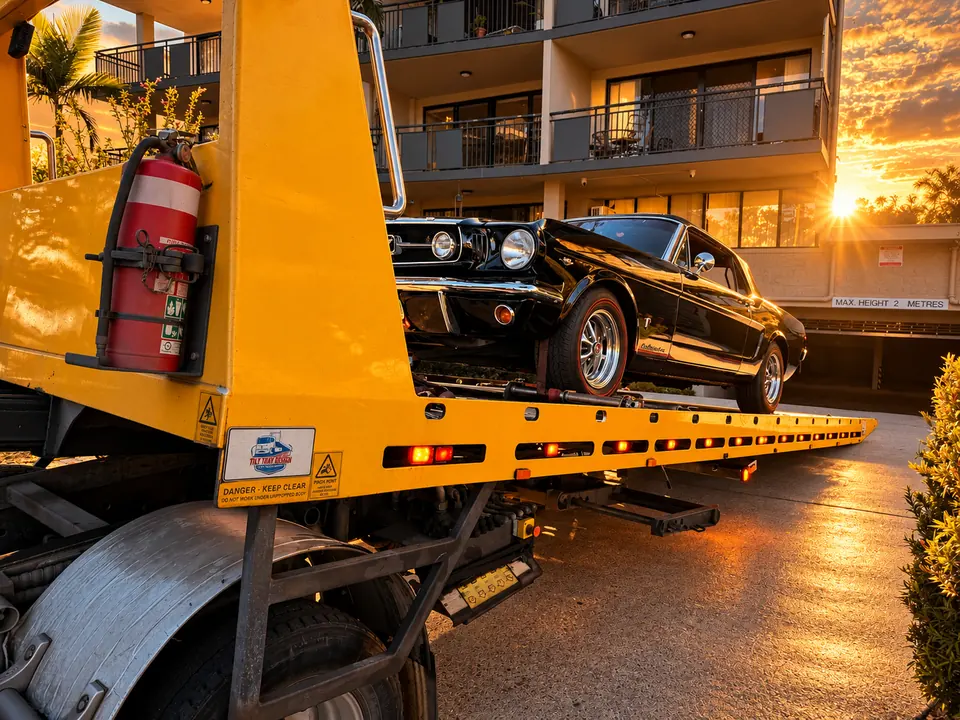
Describe the car as it is today, not how it was last driven
If a classic has been in storage, confirm whether tyres hold air, wheels rotate, steering moves and the brakes release. A car that last ran a year ago may have a seized brake, stale fuel or battery failure. Tell the operator about these conditions rather than assuming it will drive onto a tilt tray.
Some older vehicles use manual chokes, non-standard ignition sequences, low-slung exhausts or fragile gear selectors. The owner should explain any model-specific handling instructions; the transport company should not be expected to experiment with starting procedures or force controls.
Watch the parts that are difficult to replace
Chrome bumpers, low exhaust pipes, front valances, splitters, ornamental trim and rear overhangs may be vulnerable during loading. A low breakover angle can affect long-wheelbase classics even when ride height looks reasonable. Take side photographs to show the lowest points and reveal where the car is parked.
If the vehicle has been partially restored, disclose any loose panels, glazing, non-fixed interior parts or components that cannot safely be secured. Transporting a rolling car differs from relocating a stripped shell that lacks wheels or suspension.
Prepare the pickup and receiving owner
Remove loose personal items and valuable detachable pieces where practical. Record visible exterior condition, existing paint defects and known mechanical limitations. Confirm whether the key starts the car and whether a second key or alarm system affects movement. Do not store a loose key in an obvious place while waiting for collection.
At delivery, make sure the workshop, restorer or storage facility has adequate space and knows what the driver may need for unloading. A narrow restoration shed or steep residential garage could make placement impossible, even if the car travels safely on the road.
What a useful classic-car transport request includes
- Year, make, model and approximate dimensions.
- Whether it runs, rolls, steers and brakes and if any controls are unusual.
- Details of fragile trim, unusual exhaust clearance, low bodywork or loose parts.
- Photos of both loading locations and any driveway gradients.
- Collection and delivery contacts with secure key handovers.
Ask for a suitability assessment under prestige and low-clearance transport, or general vehicle transport Brisbane if the car is suitable for ordinary handling.
Classic-car transport FAQs
Do I need to start the car before it can be transported?
Not necessarily. However, a non-running car must still be assessed for safe wheel movement, loading and steering.
Can a partly restored vehicle be moved?
Possibly, depending on what is missing and how it is supported. Missing wheels, brakes or suspension may require specialist equipment.
Does the driver provide mechanical inspection?
No. The transport service concerns safe movement and handover, not authentication, valuation or a restoration assessment.
Need a suitable Brisbane tow or transport quote?
Tell BTC the vehicle or machinery model, exact pickup and destination, whether it rolls or operates normally and any access limitations. We assess suitable non-crash jobs and confirm the quote and current availability before dispatch. No underground car-park recovery.