A motorcycle needs different handling from a car
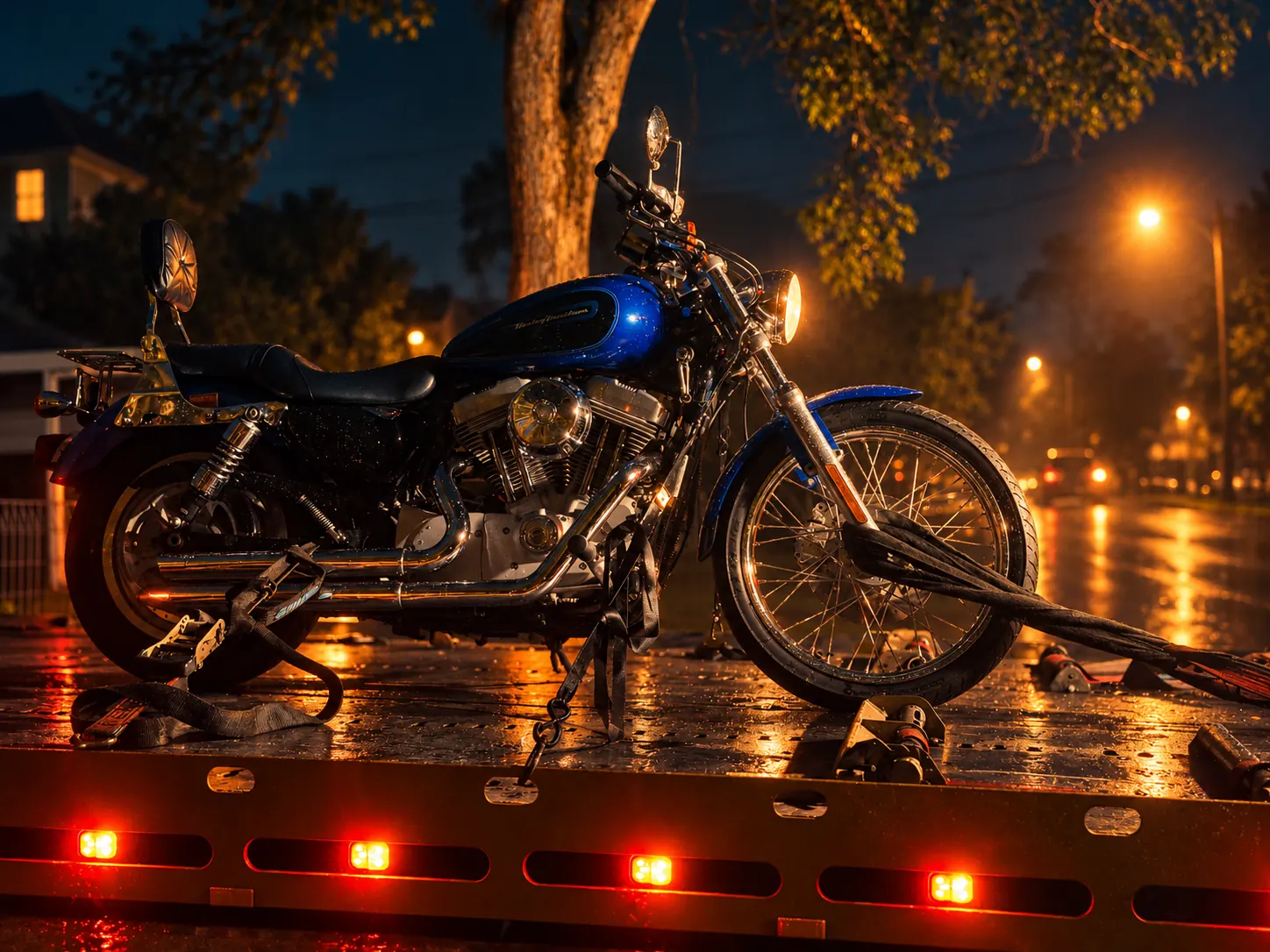
A bike that will not start, has a flat tyre or suffers an electrical issue may need workshop transport rather than an unsafe ride. Loading and securing a motorcycle requires attention to its weight, balance, steering, fairings and suitable tie-down points. It should not be treated as if it were a small car or strapped over delicate bodywork.
Before requesting a tow, contact your motorcycle mechanic and confirm that it can accept the bike on the proposed date. Some specialist workshops have limited unloading access or only take specific brands.
What may stop a bike being rolled normally
A seized wheel, damaged steering, broken drive chain, locked steering or other fault can change how the motorcycle is presented for loading. A low or wide custom cruiser may also need a different approach from a lightweight commuter bike. Explain these facts before dispatch; they affect suitability more than simply saying that the engine does not start.
Tell us about the motorcycle
- Make/model, estimated weight and whether it is a cruiser, sports bike, tourer, scooter or other type.
- Whether both wheels roll and the bars can turn freely.
- Any panniers, top box, fairing damage or non-standard accessories.
- Key availability and whether the bike is on a centre or side stand.
- Pickup site, chosen workshop, appointment day and repairer contact.
Where it is parked matters
A motorcycle in an open driveway differs from one in a narrow locked compound, behind a barrier or on a steep footpath. We need a safe position to load the bike and enough space to use the correct handling equipment. If a bike has fallen or is badly damaged, describe its condition so we can determine if standard transport is appropriate.
Confirm the receiving person
A workshop should know that the motorcycle is being delivered by truck and that it may not move under its own power. Agree on the place to unload, the key handover and any job reference. We do not assume that a bike can be left unattended outside a closed workshop.
Price for the real bike move
The route, actual motorcycle characteristics, loading access and condition are checked before quoting. We confirm a specific collection and delivery plan rather than asserting that all bike tows carry the same flat rate. For wider bike types, see our motorcycle towing service page.
Tell the repairer how the bike will arrive
A motorcycle shop may have room for riders to park at the front but only a narrow loading lane for vehicles. Ask where the transport operator can safely unload and whether a staff member can assist with receiving the bike. If the workshop is closed, leaving a motorcycle and keys unattended is not a suitable default handover. Confirm a staffed time or an expressly agreed alternative.
After a puncture or drivetrain problem
A flat tyre, broken chain or jammed wheel can stop a bike from rolling even if its engine starts. That is a loading condition, not merely the reason for the repair. For a heavy tourer or cruiser with luggage, the extra weight and accessories should be described. Some motorcycles have non-standard handling points or protruding fairings that must be considered when securing them.
For the customer's records, it helps to take photographs of the bike's existing condition and remove unsecured luggage before collection. These preparations do not replace the operator's loading assessment, but they make the handover clearer.
A final job-specific check
If the bike is fitted with hard panniers, a tall screen or aftermarket exhaust, those details can affect how it is approached and secured. Send a clear photograph when the configuration is unusual instead of relying on the motorcycle model name.