
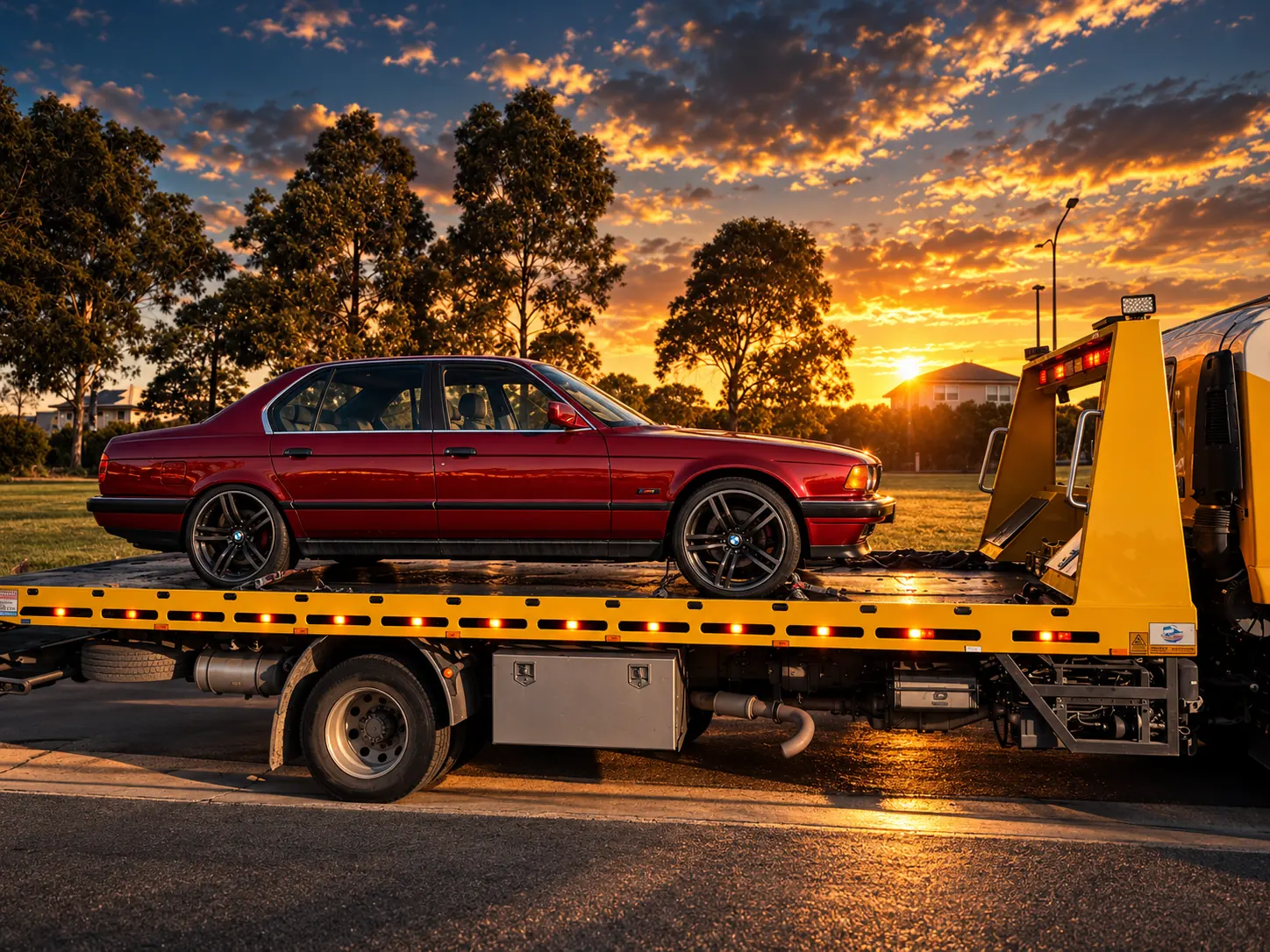
A short tow is a complete loading job
A move across a few streets can sound simple, but the truck still needs to reach the vehicle, position safely, load and secure it, travel to the destination and unload correctly. The distance is only one part of the work. This matters particularly when comparing a short tow against the idea of pushing or rope-towing a vehicle that is not mechanically safe to drive.
Common short moves include a car from home to the local mechanic, a disabled vehicle from a roadside location to a nearby workshop, a car moved between repair businesses, and a vehicle delivered to storage. A short trip can also be booked in advance when the vehicle is already safely parked.
Conditions that matter more than the kilometres
If the steering is locked, the transmission is in Park, or a wheel will not rotate, loading may require a different approach. A lowered sports car on a steep driveway may also need extra clearance planning. Tell us about these conditions when asking for a price; the total cost can differ from a freely rolling vehicle over the same route.
For both addresses, confirm whether there is room to position a tilt tray, overhead clearance and a suitable unloading point. Narrow access and traffic restrictions can matter on even the shortest transport job.
What to send for a local towing quote
- Exact pickup and delivery addresses, including any building or parking access instructions.
- Vehicle model, approximate size and whether it can roll and steer normally.
- Whether keys are present and someone can release the vehicle.
- The business hours of the receiving workshop or storage site.
- Any issue that could require additional handling before loading.
Why we quote the whole job
We do not treat “five kilometres” as enough information to guarantee a price. A proper quote includes the intended move and the known loading conditions. If you're comparing companies, ask what is included and whether special handling is extra. BTC confirms its actual price before dispatch rather than displaying an unsupported universal local-tow fee.
Choosing the destination
If the car is undriveable, choose a place able to accept it. A mechanic may require advance notice, whereas a private driveway may need someone to unlock a gate or move another vehicle. If you have not chosen a destination, confirm that before dispatch; changing the destination mid-job changes the agreed work.
Short moves inside busy suburbs
A short tow through the CBD or an inner suburb might involve loading from a signed kerbside location, narrow road or heavily parked street. The actual loading point should be lawful and safe for a truck, not simply the nearest spot shown on a navigation app. Tell us if the car can be pushed to an approved off-road area only if it is safe to do so; never move it into live traffic to help with the tow.
An industrial-estate pickup can have similar issues: gated sites, delivery trucks using the same loading area and separate goods-vehicle entrances. Providing the correct entrance can matter more than whether the destination is three or ten kilometres away.
One trip, two accessible sites
To confirm the job, work backwards from the delivery: does the destination have space to set the car down if it is non-running? If the mechanic closes early, can it accept the keys? Is the driveway steep or blocked by another car? When both sites are ready, the short journey becomes a straightforward transport job rather than a collection followed by an unexpected access problem.