
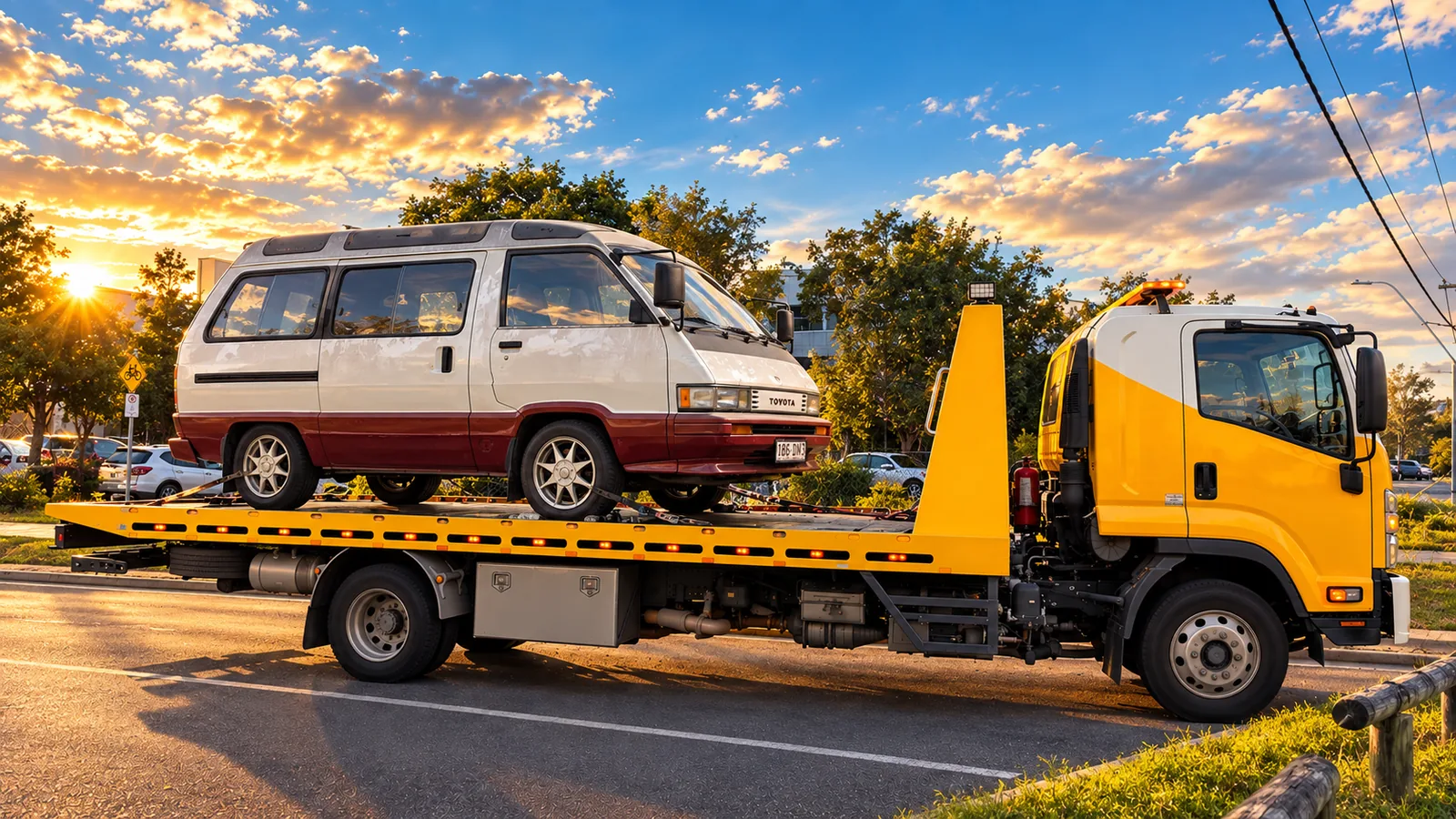
A work van is not always just a large car
A short-wheelbase empty delivery van may be straightforward to assess. A high-roof van carrying tools, shelves, water tanks, refrigeration equipment or a heavy load can be a very different proposition. Before arranging a tilt-tray tow, we need to know the real vehicle configuration and likely loaded weight, not just the badge on the bonnet.
BTC can assess suitable light commercial vehicles within the available equipment’s limits. This page is not an offer to tow heavy rigid trucks or every oversized fit-out.
Breakdown situations we can assess
A van may stop due to a mechanical fault, lose power at a worksite, need transport between depots or be taken to a specialist workshop after a warning light. If the fault has affected steering, tyres or brakes, the loading plan changes. Do not ask a worker to continue driving a van with a suspected serious fault solely to save the cost of a tow.
Tell us about the van, not only the route
- Make, model, wheelbase, roof height and any extensions or racks.
- Whether the van is empty or carries tools, stock or equipment—and an honest weight estimate.
- Any rooftop equipment, liftgate or protruding fittings.
- Ability to start, roll and steer, plus the keys and handbrake status.
- Exact pickup position, clearance and nominated workshop/depot destination.
Cargo and security before transport
If possible, secure loose goods and remove fragile or valuable cargo before collection. A moving van with unsecured stock can create a safety problem during loading and transport. If the cargo cannot be removed or includes hazardous material, disclose it before seeking acceptance. We may need to decline loads that cannot be transported within safe operating conditions.
Arrival at a workshop or depot
The receiving site needs enough space to unload a van, not just parking space for a passenger car. Confirm high-roof clearance and turning room. If your breakdown occurred near a loading dock or warehouse gate, give the operator the truck-access entrance rather than directing them to a pedestrian reception door.
Quote and suitability
We check the loaded vehicle details, the route and time, then confirm whether a suitable tow is available and the price. A light-commercial quote should never silently assume an empty standard vehicle when the actual vehicle has commercial fittings or heavy cargo.
Common body configurations that change the assessment
A plain short-wheelbase van, a long-wheelbase high-roof cargo van and a fitted-out service van may share a manufacturer's badge but differ dramatically in height, mass and how they can be loaded. Refrigeration units, ladder racks, roof lights and rear steps can create clearance issues. A liftgate or heavy shelving can shift load distribution. Send actual measurements and photographs if the vehicle has been modified.
A breakdown in a warehouse yard
If the van has failed at a depot, identify the heavy-vehicle access point, not the customer entrance. A tilt-tray truck needs room to approach, load and leave without blocking a live delivery bay. Tell us about low awnings or narrow turning areas. At the destination, the mechanic also needs room for an undriveable van; do not assume a normal customer parking bay is sufficient.
If the van has a damaged wheel or seized brake, that changes the handling plan. The driver should not be expected to pull a fully loaded vehicle on a locked wheel just to meet a dispatch time.
A final job-specific check
If the van operates with a refrigeration unit, compressor or power equipment, tell us whether those systems need a safe shutdown before transport. The company responsible for the vehicle should prepare its own equipment, not leave it to towing staff.