
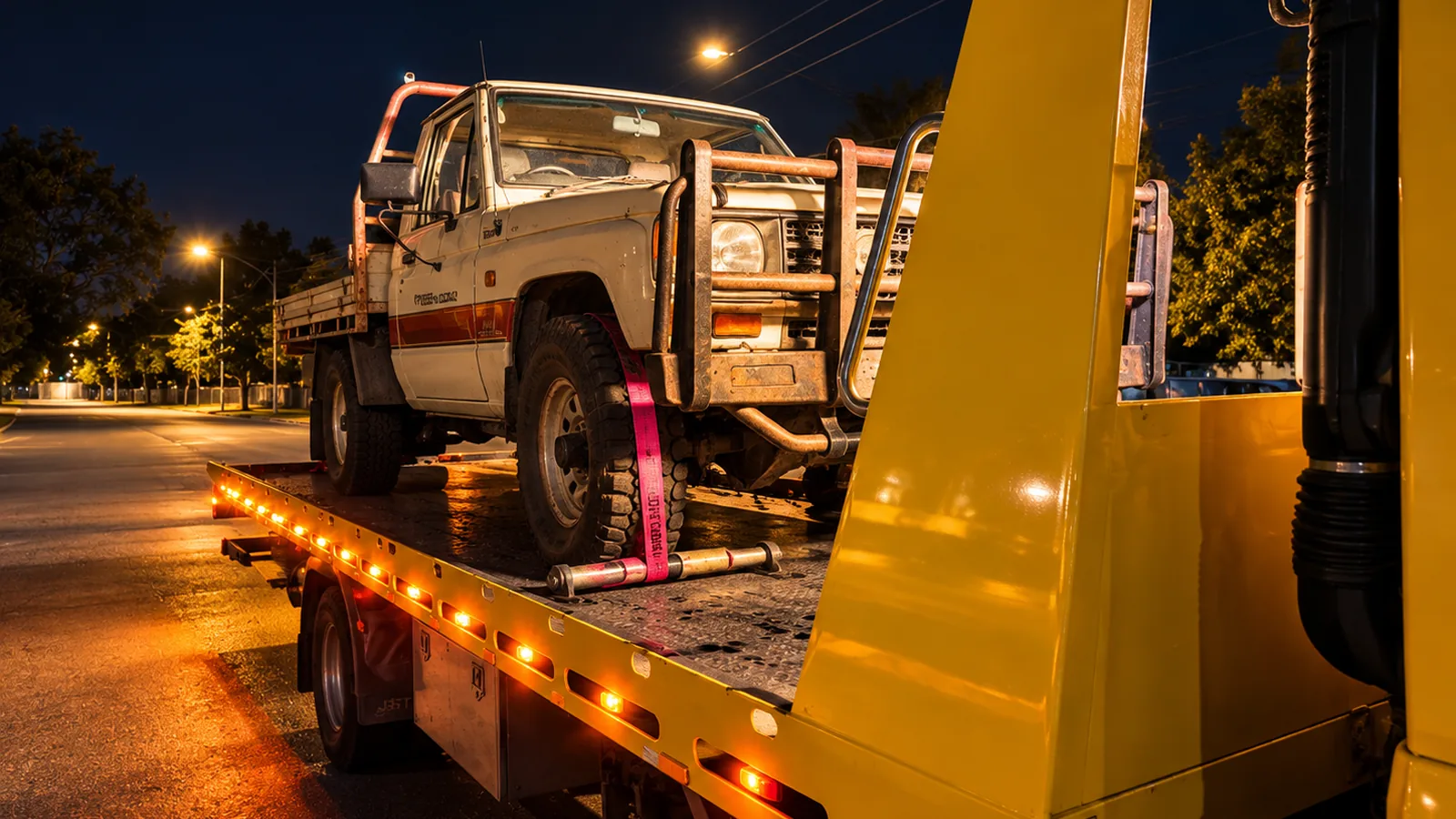
When a non-starting vehicle needs transport
A flat battery, starter problem, fuel-system fault or electrical issue can leave a car unable to start. Some faults may be resolved by an appropriate roadside provider; others need a mechanic. If the car is in a safe position and you already know it needs workshop attention, a tow is a practical way to move it without risking further damage by repeated attempts to drive.
Avoid trying to jump-start a vehicle if you suspect damaged wiring, battery leakage, smoke or other unsafe symptoms. If you smell fuel or see smoke, move people clear and seek the appropriate emergency assistance rather than concentrating on the towing booking.
Starting failure does not tell us whether it can be loaded
Two cars that both “won't start” may be very different to collect. One might release its steering and roll normally; another could have an electronic handbrake engaged, locked steering or a transmission that cannot leave Park. The loading method can change. Tell us what does and does not work, rather than describing every non-starting car as a straightforward tow.
Where should the car go?
A repair workshop is common, but you may prefer an agreed private destination or secure storage. Check that the receiving business can accept delivery, especially late in the day. A car arriving when the premises are closed can create an access issue even when the pickup itself is easy.
What we need for a quote
- Pickup address and whether the car is roadside, in an open car park or on a driveway.
- Vehicle make/model and whether the keys unlock steering and release the handbrake.
- Whether the wheels roll, the tyres hold air and the car can be moved into neutral.
- Chosen workshop or destination, available delivery time and handover contact.
- Any known fault that affects safe handling, including a flat tyre or suspected fluid leak.
Protect the vehicle and the pickup site
If the car is on a busy road, follow safe-breakdown guidance and do not wait in live traffic. Do not ask friends to push a vehicle into an unsafe position just to make loading easier. Once we have the job details, we can assess truck access and advise whether the standard equipment is suitable. We do not offer crash recovery or underground car-park extraction as standard services.
What to avoid telling the truck operator
“It's just the battery” can be misleading if the actual cause has not been diagnosed. Modern vehicles may have electronic parking brakes or transmissions that stay locked with no power. Instead, tell us the observable symptoms: dash lights, whether the starter turns, whether the steering lock releases and whether the wheels will roll. We are quoting transport, not diagnosing the fault over the phone.
If the vehicle has been repeatedly jump-started, that is useful background but does not prove that it is safe to drive. If there has been a burning smell, fluid leak or smoke, report it and follow suitable safety guidance.
Handover to a mechanic
Before collection, ask the workshop whether it wants the car delivered to the service lane or a designated storage area. Note the fault description for the repairer separately from the towing instructions. If the vehicle is in a location accessible only by moving other cars, arrange that access beforehand. A successful tow gets the vehicle to a person who can accept it, not merely to the address printed on a repair-shop website.