
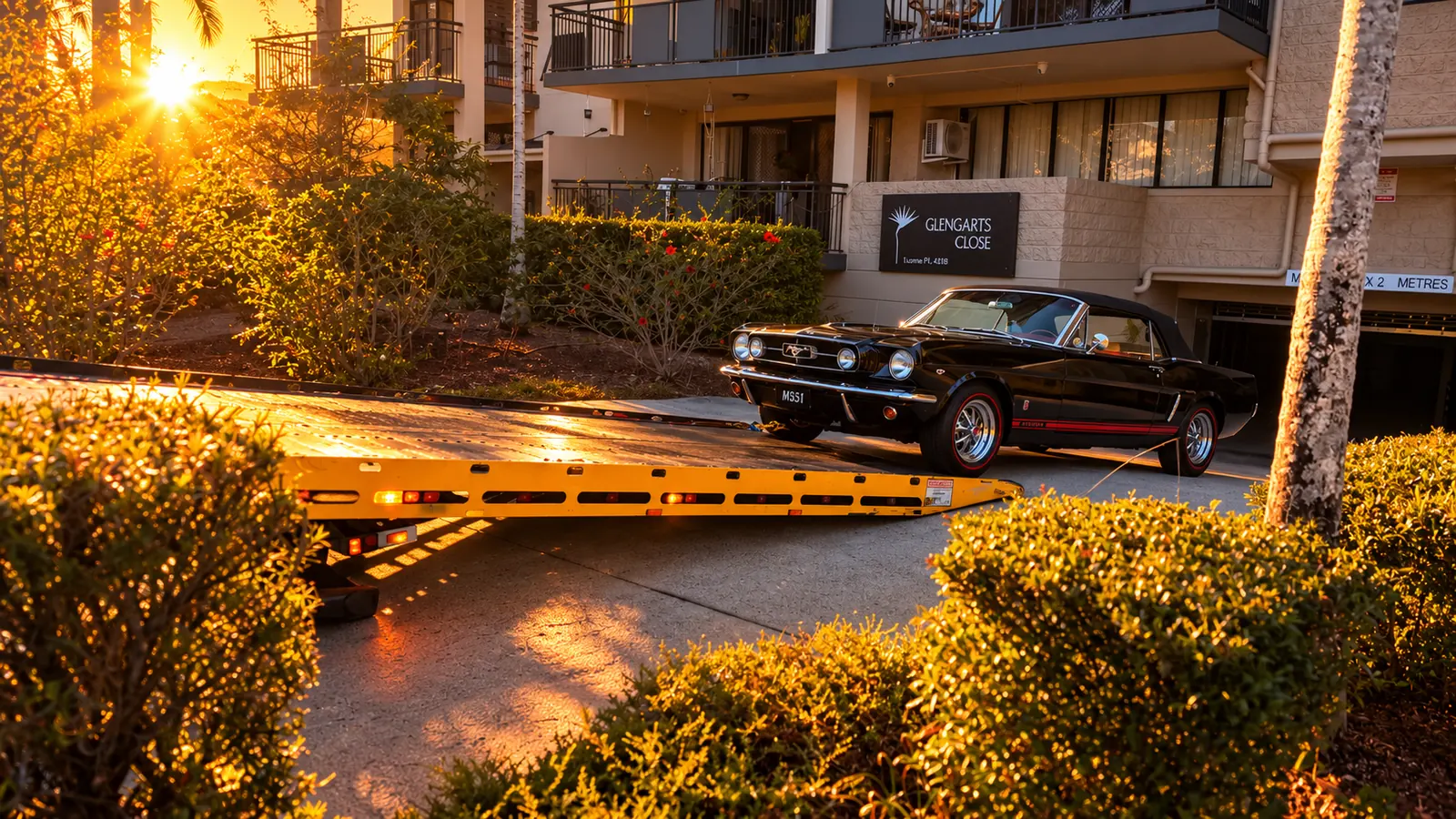
Getting a classic car to an event takes planning
Owners may prefer not to drive a collector vehicle across town, especially if it is rarely used, unregistered, mechanically delicate or has very low ground clearance. A transport booking can move a suitable vehicle to an exhibition, photoshoot or other agreed location. It still needs a legal unloading area and a recipient—an event ticket alone does not guarantee truck access.
This page concerns transport, not event management or an assurance that any particular show venue accepts tilt-tray vehicles on site.
Speak with the venue before transport day
Ask the organiser about display vehicle entry times, allowed unloading gates, contractor access, surface protection rules and whether the car needs to be pushed into position after unloading. A crowded event driveway may not have enough room to operate a tilt tray. It may be necessary to arrange an approved delivery point nearby, subject to the venue's rules.
Why older vehicles can need special preparation
Older cars may have weak batteries, stiff brakes, non-standard wheels, manual steering, fragile bumpers, low exhausts or limited tie-down points. A classic may start but still be unsuitable to drive. Tell us what the vehicle can safely do and whether any parts are unusually delicate or newly restored. Do not hide a problem to make the quote sound routine.
Practical event-transport details
- Event address and the specific approved vehicle-unloading entrance.
- Set-up and departure windows, including any lockout periods.
- Vehicle make/model, approximate weight, clearance and running condition.
- Owner, organiser and destination release contacts.
- Any special wheels, body kits, fragile exhaust components or non-standard loading considerations.
Return transport may be a separate job
If the vehicle must return after an event, request both directions and dates. A return collection after venue closure or late at night can have different access and availability constraints. Do not assume that one-way delivery automatically reserves a truck for a return journey or that overnight storage is included.
A precise plan protects everyone’s time
Before dispatch, confirm the venue will actually admit the truck, that the vehicle has an authorised person present, and that the agreed loading method suits its condition. The quote will be based on that confirmed plan. If access or car condition differs materially on arrival, the operator must reassess rather than take unnecessary risks.
Event transport is built around a venue plan
An event organiser may impose different loading times for exhibitors and the general public. Ask whether the tow truck needs a contractor pass, the precise gate to use and whether the transport vehicle may enter the display space. If the show is on grass or temporary surfaces, do not assume the truck can cross the area without permission. A separate approved unloading zone may be required.
If an event requires the classic to be driven or pushed into its final position, tell us whether that is mechanically possible. Standard towing transport is not a guarantee that staff can stage the car inside a display area.
Prepare unusual classic-car controls
Older handbrakes, column shifters, mechanical steering locks, non-standard ignition switches and fragile body fittings may not be familiar to every driver. The owner should explain the relevant operation and be available for handover where necessary. A safe loading method is decided from the actual vehicle and its condition. The same applies to a return pickup after a long day on display when the vehicle has not been started.